Southern Forests Completes Inaugural Carbon Strategy Pilot
The Southern Forests Food Council (SFFC) has completed its inaugural Southern Forests Carbon Strategy Pilot, supporting local producers in establishing on-farm carbon baselines and identifying practical strategies to strengthen climate and drought resilience.
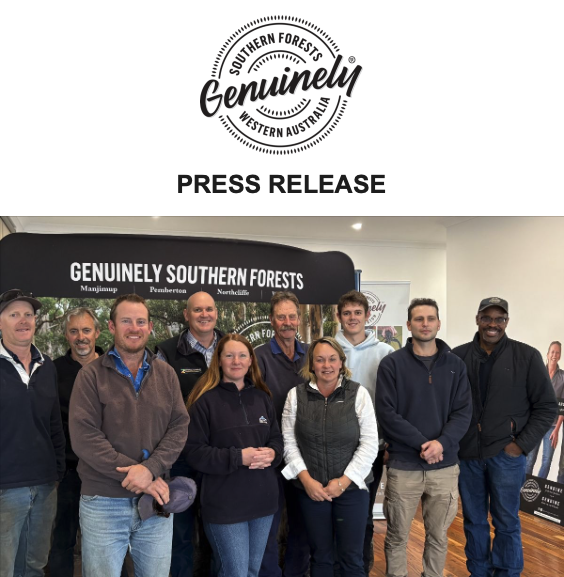
The pilot engaged 7 farming businesses across the region and provided growers with regionally relevant data and insights.
Growers Taking the Lead on Carbon Accountability
SFFC Chair Dr Arthur Wilson said the pilot addressed a recognised gap in carbon accounting for mixed horticultural systems and opened the door to a second round of funding and project expansion.
“This pilot has demonstrated that Southern Forests growers are willing to engage proactively with carbon accounting when the tools are practical, transparent and locally relevant,” Dr Wilson said.
“Rather than waiting for compliance pressures to dictate action, our producers are taking steps to understand their emissions, improve efficiencies and strengthen the resilience of their businesses. That puts our region in a strong position for the future.”
Understanding Emissions from the Ground Up
The participants represented a diverse mix of horticulture and integrated livestock enterprises. Using the Primary Industries Climate Challenges Centre (PICCC) Farming Greenhouse Accounting Framework (GAF) tools and guided by expert consultants, participants calculated whole-of-farm emissions profiles and identified key emissions sources, such as fertiliser use, energy consumption, fuel, and enteric carbon from livestock.
Participants reported increased confidence in carbon reporting and a clearer understanding of emissions “hot spots” within their operations. Importantly, the pilot also laid the foundation for developing regional carbon benchmarks, supporting a coordinated, data-informed approach to sustainability.
Farmers Shape the Policy Conversation
Another key benefit of the pilot was providing farmers with a structured opportunity to give real, practical feedback on the growing burden, cost, and complexity of carbon compliance.
Through workshops, surveys and direct discussions, participants shared their concerns about time pressures, data requirements, tool usability, and the risk that smaller producers may struggle to keep pace with evolving reporting expectations.
The SFFC has shared feedback with government and industry stakeholders to ensure policy and program development reflects on-the-ground realities.
“Our growers have been clear – they want to be part of the solution, but systems need to be practical, fair, and recognise the diversity of farming enterprises, including the native vegetation and natural assets already managed by producers,” said Dr Wilson.
“If carbon compliance frameworks are going to work, they must be workable at the farm level,” said Dr Wilson.
One participating grower said the opportunity to contribute to policy conversations was just as valuable as the technical outcomes of the pilot.
“It wasn’t just about calculating emissions. It was about being able to say, ‘This is what it actually looks like on a working farm.’ Knowing that our feedback is being passed on to decision-makers makes the process feel more constructive and collaborative.”
Round Two: Expanding the Program
Building on the success of the first round, the SFFC has secured additional funding to deliver a second round of the Carbon Strategy Pilot. Expressions of Interest will open shortly, with a strong focus on expanding participation and building further regional benchmarks.
The SFFC is also exploring a strategic collaboration with the Southern Forests Young Growers network to ensure the next-generation of producers have access to the program and are equipped to navigate future carbon and climate requirements early in their careers.
“Our younger producers will operate in a business environment where carbon literacy and climate resilience are essential. By involving them now, we’re building capability for the long term and ensuring Southern Forests remains competitive and credible in evolving domestic and international markets,” said Dr Wilson.
The Southern Forests Carbon Strategy Pilot is supported by the South-West WA Drought Resilience Adoption and Innovation Hub through funding from the Australian Government’s Future Drought Fund.
Contact:
Laura Bolitho
Southern Forests Food Council
laura@southernforestsfood.com
Website: http://www.southernforestsfood.com
Facebook: Genuinely Southern Forests
Instagram: @genuinelysouthernforests
LinkedIn: Southern Forests Food Council
 Being Arthur